누가 Kojijū와 데이트 했나요?
Go-Shirakawa 날짜가 Kojijū 일 때 ?에서 ?. 까지
Kojijū
Kojijū (小侍従; 1121–1202 CE) (also Matsuyoi no Kojijū) was a waka poet and Japanese noblewoman active in the late Heian period.
Her father was Ki no Mitsukiyo, and her mother was the poet Hanazono Sadaijinke no Kodaishin.
As a lady-in-waiting, she served the twice-empress Fujiwara no Tashi (who was wife, successively, to Emperor Konoe and Emperor Nijō), as well as in the court of the retired Emperor Takakura. Additionally, she took part in poetry contests organized by Emperor Go-Toba. During this time, courtiers were expected to be skilled poets, and a great deal of court life involved composing and exchanging poetry, as well as participating in poetry contests. Kojijū is designated a member of the Female Thirty-Six Immortals of Poetry (女房三十六歌仙, Nyōbō Sanjūrokkasen). She left a private collection of poems titled the Kojijū-shū.
Contemporaries noted her for her especial skill in composing poems that exactly suited the situation, particularly when writing a verse as a response to someone else's verse.
In 1179, she became a Buddhist nun.
더 알아보기...Go-Shirakawa
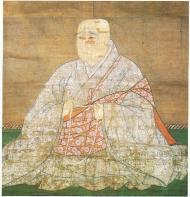
고시라카와 천황(일본어: 後白河天皇, 1127년 10월 18일 ~ 1192년 4월 26일)은 77대 일본 천황으로 휘는 마사히토(일본어: 雅仁)이다. 호칭의 유래는 72대 천황 시라카와 천황(白河天皇)에서 유래하였다.
1127년 도바 천황의 중궁(中宮) 후지와라노 다마코(藤原璋子)의 넷째 아들로 태어났다. 규주 2년 (1155년) 고노에 천황이 17세로 요절하자 황위를 물려받아 즉위했다. 1156년, 호겐의 난이 발생하여 이 사건이 원인이 되어 무려 347년간 폐지되어왔던 사형 제도가 부활했다. 호겐의 난 이후 권력을 장악하여 1158년에 양위한 후에도 상황으로서 권력을 유지하였다. 후지와라씨의 영향력을 약화시키고 사무라이의 권력을 강화하려는 정책을 써서 다이라노 기요모리가 권력을 잡게 되었다. 말년에 와서는 미나모토노 요리토모가 가마쿠라 막부를 세우는 것을 묵인하였다. 이후 일본은 메이지 유신이 일어나기까지 700여년에 걸쳐 무사계급의 지배를 받게 된다.
더 알아보기...