누가 페로 3세와 데이트 했나요?
Inés Zapata 날짜가 페로 3세 일 때 ?에서 ?. 까지
Maria Nicolau 날짜가 페로 3세 일 때 ?에서 ?. 까지
Macalda of Scaletta 날짜가 페로 3세 일 때 ?에서 ?. 까지
페로 3세
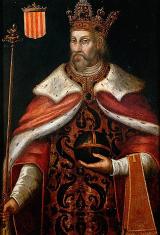
페로 3세 다라곤(아라곤어: Pero III d'Aragón, 카탈루냐어: Pere III d'Aragó, 1239년 ~ 1285년 11월 11일)은 아라곤 연합왕국의 국왕으로 별명은 대왕(아라곤어: lo Gran, 카탈루냐어: el Gran) 즉, 아라곤 왕 중 위대한 군주로 손꼽힌다.
아라곤 외에도 발렌시아 왕국의 국왕(페레 1세), 바르셀로나 백작(페레 2세)도 겸한다. 시칠리아 왕국의 공주이자 아라곤 연합왕국의 왕비 쿠스탄차의 시칠리아 왕위 계승권을 앞세워, 시칠리아를 정복하여 쿠스탄차와 공동군주(페트루 1세)가 되었다.
더 알아보기...Inés Zapata
페로 3세
Maria Nicolau
페로 3세
Macalda of Scaletta
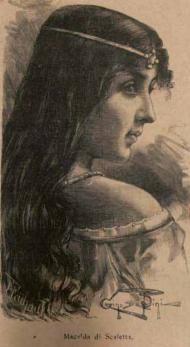
Macalda di Scaletta (or Machalda; c. 1240 in Scaletta Zanclea – after October 14, 1308? in Messina) was a Sicilian baroness and lady-in-waiting during the Angevin and Aragonese periods. The daughter of Giovanni di Scaletta and a Sicilian noblewoman, Macalda was noted for her political conduct, inclination to betray marriage (political and human), and for her promiscuous sexual habits; because of this dissoluteness, even having a brush with "suspicion of incest," tended to morph into an "exhibitionism veined with nymphomania." She was the wife of the Grand Justiciar of the Kingdom of Sicily, Alaimo da Lentini.
Reportedly ambitious, judicious, and educated in matters of the military, Macalda deployed her influence first in the circle of Charles of Anjou and then at the court of Peter III of Aragon, whom, according to a chronicler of the time, Macalda tried to seduce, but without success. She lived in a time of upheavals in the Kingdom of Sicily, which were marked by the bloody revolt of the Sicilian Vespers, and which led to the change from Angevin to Aragonese rule.
Practicing intrigue at court, but also vying with Queen Constance of Hohenstaufen, Macalda had a role in at first favoring, and then toppling, the political fortunes of her second husband, the Alaimo da Lentini, who had been one of the major champions of the Sicilian Vespers.
Macalda's career has left behind a recognizable historical trace, though variously treated in the chronicles of her time. One of these, the Historia Sicula by the contemporaneous Messinese chronicler Bartholomaeus of Neocastro, is aggressive towards her character, but some suspect that the political motives influencing the pro-Aragonese Neocastro may not have been the only factor in his bitterness towards Macalda, and that he was "one of the victims of the woman's spell."
Besides her military education, Macalda is also noted for her ability to play chess, which was unusual for a woman of her time, and historical evidence suggests that she was probably the first person in Sicily who learned how to play it.
Her singular figure, inhabiting the pages of chronicle and history, is transfigured in the collective memory, in folklore, and in the collective imagination. Macalda became the protagonist of popular traditions, myths, and legends of Sicily, such as one in Catania about the well of Gammazita.
A distant echo of Macalda's passion for the Aragonese sovereign, which the chronicler Neocastro disseminated in caustic tones, also seems to reverberate in Boccaccio's storytelling, with an enormous difference of tones and accents, in a much more idealized and rarefied courtly and knightly context in the Decameron: the tale of Lisa Puccini's love for King Peter of Raona (Aragon).
더 알아보기...